
Burnout is a systemic issue, not a personal failure. For leaders, it’s a costly challenge that impacts well-being, team dynamics, and organizational performance. AI tools are emerging as a game-changer, offering early detection and actionable insights to address burnout before it spirals. Here’s how they work:
- Behavior Monitoring: AI tracks changes in email tone, meeting habits, and after-hours activity to flag potential stress.
- Sentiment Analysis: Tools analyze communication patterns to detect emotional strain.
- Centralized Data: AI integrates HR and work tools for a clearer picture of leadership health.
- Proactive Alerts: Predictive systems notify HR or leaders of risks and suggest tailored interventions.
- AI Coaching: Personalized, data-driven coaching helps leaders manage stress and improve decision-making.
Organizations using these tools report higher motivation, reduced turnover, and better engagement. The key takeaway? AI doesn’t replace human judgment – it supports leaders with data-driven insights to prevent burnout and build resilience for leaders and teams.
#119 AI, Burnout, and the Future of Leadership with Victoria Mensch
sbb-itb-bc03425
Step 1: Identify Burnout Risks with AI Tools
AI can help spot the early signs of burnout by analyzing subtle changes in digital behavior. Instead of waiting for leaders to self-report their struggles, AI systems monitor shifts in communication, scheduling habits, and team interactions. These insights allow organizations to take action before burnout escalates.
Monitor Leadership Metrics with AI
AI tools are designed to detect deviations from a leader’s usual behavior. For example, if someone who normally replies to messages within two hours suddenly takes 18 hours, the system flags it as a potential issue. Similarly, AI can identify patterns like back-to-back meetings without breaks, which might signal overload.
Take Unilever as an example: in 2023, the company introduced Microsoft Viva Insights to analyze email and calendar habits across its 150,000 employees. As a result, they reduced after-hours work and improved meeting efficiency. JPMorgan Chase also used Viva Insights for its technology teams, leading to lower voluntary turnover and better work satisfaction scores.
To make these tools effective, establishing a baseline is critical. A 60 to 90-day period helps the AI learn what’s "normal" for each leader. Models tailored to individual behavior are 3.2 times more accurate at identifying risks compared to those using generalized industry data. For instance, one leader might habitually work late, while another logs off by 5:00 PM. The system only flags changes that deviate from their personal patterns.
Apply Sentiment Analysis to Team Communication
While behavioral metrics highlight changes in habits, sentiment analysis digs deeper into emotional cues within team communication. AI tools analyze the tone and content of messages, not just their timing. For instance, a noticeable decline in collective pronouns like "we" or "us" might indicate disengagement. Similarly, a rise in absolutist terms – words like "always", "never", or "completely" – can signal cognitive strain.
Another red flag is a shift toward shorter, abrupt sentences that lack articles, reflecting stress-induced cognitive overload. A drop in lexical diversity – fewer unique words being used – can also point to executive function strain.
Cigna provides a real-world example. In 2023, the company combined Receptiviti’s linguistic analysis with its internal systems to assess communication patterns anonymously. This initiative led to a noticeable reduction in burnout symptoms and fewer mental health–related absences. By pairing linguistic data with opt-in wellness surveys, organizations can predict burnout risks with 79% accuracy up to three weeks before symptoms peak.
"AI doesn’t detect burnout – it detects statistical deviations from an individual’s established behavioral signature that co-occur with known burnout correlates. It’s a probabilistic alert, not a diagnosis."
– Dr. Lena Torres, Occupational Psychologist, MIT Human Systems Initiative
The ultimate aim is to create an early warning system that encourages simple, proactive check-ins before stress spirals into a crisis. These AI-driven insights pave the way for timely interventions, helping organizations address burnout risks effectively.
Step 2: Centralize Data for Burnout Prevention
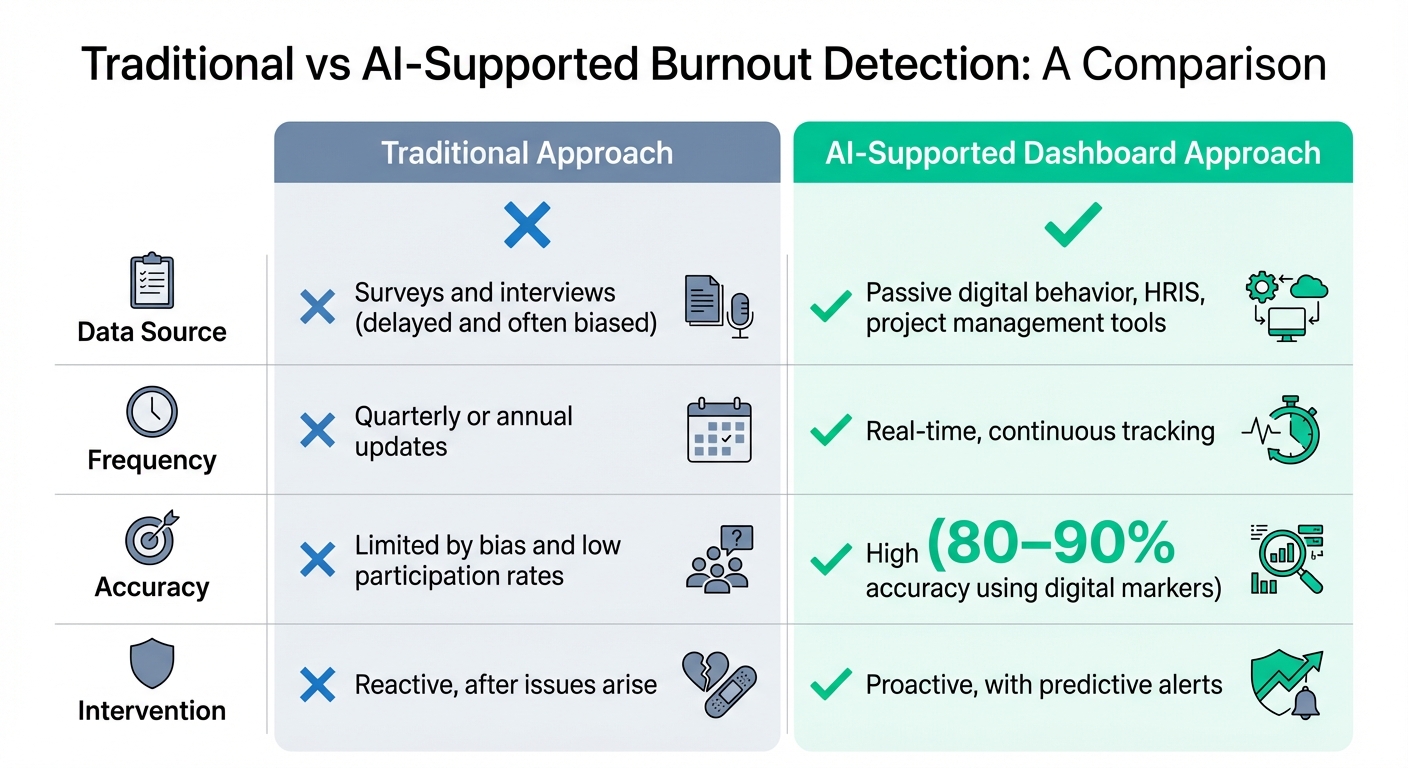
Traditional vs AI-Supported Burnout Detection Methods Comparison
Once you’ve started monitoring individual behaviors, the next step is to centralize the data. Scattered information across various platforms can make it hard to get a clear picture of leadership health. Centralizing this data turns fragmented signals into actionable insights, helping organizations identify burnout risks that might otherwise go unnoticed. This step also sets the stage for linking different systems more effectively.
Integrate HR and Collaboration Tools
The best AI systems gather data from multiple sources. This involves connecting your Human Resources Information System (HRIS) with tools like Jira or Asana for project management, Slack or Microsoft Teams for communication, and email platforms. The aim here is passive data collection – analyzing the information that’s already being generated during routine work activities.
For instance, large companies have successfully combined HRIS with communication tools to create dashboards that track digital activity. These systems work in the background, capturing data points like late-night logins, slow email responses, and reduced participation in optional meetings – without requiring extra surveys.
Some advanced setups even incorporate biometric data from wearables, provided employees give explicit consent. Metrics such as sleep patterns and heart rate variability add a physiological layer to the behavioral data, offering a more complete view of stress levels. Transparency is critical here. Employees need to understand what’s being tracked and why. Using anonymized data can help maintain trust and avoid the perception of overreach.
Track Patterns and Trends with AI Dashboards
Centralized dashboards bring all these data points together, presenting them in visual formats that make patterns easier to spot. Instead of sifting through dozens of separate reports, leaders can quickly identify trends like spikes in overtime, increased workloads, or declining engagement. For example, a dashboard might highlight that a specific team has experienced three consecutive weeks of high overtime while participation in meetings has dropped by 20% – a clear red flag.
By unifying data sources, these dashboards refine insights and reveal sustained patterns that call for action. This approach aligns perfectly with strategies to prevent burnout before it escalates.
Here’s how an AI-supported system stacks up against traditional methods:
| Aspect | Traditional Approach | AI-Supported Dashboard Approach |
|---|---|---|
| Data Source | Surveys and interviews (delayed and often biased) | Passive digital behavior, HRIS, project management tools |
| Frequency | Quarterly or annual updates | Real-time, continuous tracking |
| Accuracy | Limited by bias and low participation rates | High (80–90% accuracy using digital markers) |
| Intervention | Reactive, after issues arise | Proactive, with predictive alerts |
To make this approach effective, it’s crucial to set clear thresholds for risk. For example, you could configure the dashboard to alert HR when after-hours activity spikes or response times noticeably slow down over a sustained period. These alerts aren’t just numbers – they’re opportunities for leaders to step in early and address potential stressors before they grow into major problems. While the dashboard provides the data, it’s up to human leaders to decide the best course of action.
Step 3: Use AI for Early Interventions
After centralizing your data and spotting patterns, the next step is leveraging AI to act early. This phase shifts AI’s role from merely identifying issues to actively addressing them. The focus here is on recognizing potential problems early and responding with tailored support. By doing so, you move from passive observation to proactive solutions, helping leaders tackle stress in real time.
Configure Predictive Alerts and Triggers
AI shines when it can automatically detect and flag risks based on set thresholds. For instance, you can program the system to alert HR if an employee works more than 50 hours per week for three straight weeks or if their meeting participation drops by 20%. A great example of this in action comes from a major software company in August 2025. They used burnout-predicting AI to monitor developer workloads, coding activity, and after-hours communication. These alerts helped managers adjust project timelines or offer recovery days, leading to an 18% reduction in engineer turnover within a year.
Sentiment analysis is another powerful tool. By analyzing tone in emails and chat messages, AI can detect signs of negativity, frustration, or abrupt responses. When combined with workload data, these insights create a clearer picture of when intervention might be necessary.
The key is pairing these alerts with constructive actions. For example, if a threshold is crossed, the system could recommend a break, suggest a coaching session, or prompt a manager to check in – ensuring the response is supportive rather than punitive.
Apply AI-Powered Coaching Tools
Once AI identifies stress signals, coaching tools powered by AI can step in to provide personalized support. These platforms analyze communication habits, stress patterns, and behavioral tendencies to offer tailored advice. Instead of generic wellness suggestions, they deliver specific, actionable tips – like reframing a challenging conversation or taking a quick mental reset before a high-stakes meeting.
Take Gorgias, for example. In November 2025, they introduced Coachello, an AI-driven coaching platform, to assist their remote teams. The results were impressive: a 60% boost in employee motivation, a 75% improvement in perceived growth, and 98% of participants applying coaching insights to their leadership roles. The platform also offered role-play simulations, allowing leaders to practice navigating tough conversations, which helped build confidence before tackling real-world challenges.
These tools also provide micro-interventions. For instance, if a leader’s schedule is packed with back-to-back meetings, the system might suggest a quick breathing exercise or a short mindfulness break. Over time, these small adjustments can make a big difference – leaders using AI-driven mental fitness tools report up to 25% better decision-making and 30% lower stress levels.
"AI isn’t a replacement for intuition or presence; it serves as a mirror and co-regulator, helping coaches sustain their work over time." – Dr. Lisa Turner, Founder, CETfreedom
AI coaching platforms are built on thousands of real coaching conversations and proven methodologies. They adapt to emotional cues, track progress, and refine their approach based on what works best for each individual. These tools go beyond offering advice – they evolve with the user, ensuring support remains relevant and effective.
Step 4: Build Leadership Resilience with Resilient Power®️
After using AI to identify and mitigate burnout risks, the next step focuses on integrating science-backed strategies for lasting resilience. Resilient Power®️ combines AI tools with proven frameworks to address burnout from a deeper perspective – not just as a workload issue, but as a challenge rooted in the nervous system. By emphasizing early detection and tailored solutions, this approach supports leaders in maintaining long-term well-being.
Use Science-Driven Resilience Techniques
Resilient Power®️ leverages the Technology-Organization-Environment (TOE) Framework to blend AI applications with traditional leadership training. This approach enhances "AI learning self-efficacy", which is essentially a leader’s confidence in using AI tools to manage their own mental health and team dynamics. Studies indicate that this method significantly lowers burnout in high-stress environments.
Additionally, the system incorporates Maslach’s Six Areas of Worklife to tackle core burnout triggers: lack of control, value misalignment, insufficient rewards, chronic overwork, perceived unfairness, and community breakdown. Instead of offering generic wellness programs, Resilient Power®️ creates personalized strategies by analyzing each leader’s unique personality traits and stress responses. This approach helps leaders clear mental and emotional noise, enabling them to make thoughtful, grounded decisions rather than simply striving for higher productivity.
Address Incidents and Mitigate Risks
Prevention is key, but managing crises effectively when they arise is just as important. Resilient Power®️ includes incident response tools designed to handle organizational challenges. These custom AI solutions uncover patterns that traditional systems often overlook – like how decision fatigue early in the week might lead to team conflicts later on. By turning leadership practices into AI-driven protocols, the system allows leaders to extend support across their teams without adding to their own emotional burden.
Monitor and Refine AI Strategies for Long-Term Results
Introducing AI tools into your workflow is just the starting point. The true advantage lies in ongoing monitoring and adjustments to ensure these systems genuinely alleviate burnout rather than unintentionally adding to it. Without regular oversight, AI can sometimes lead to "work intensification", where employees take on more tasks simply because the tools make handling larger workloads seem manageable.
Review Intervention Outcomes
Consistent evaluation of AI’s impact is essential to ensure its long-term effectiveness. Track metrics like meeting durations, focused work periods, and after-hours communications to assess whether interventions are working. Compare key indicators such as absenteeism, turnover rates, and employee motivation before and after introducing AI tools. For example, in 2025, Gorgias combined leadership analytics with the Coachello coaching platform, which resulted in better motivation, personal growth, and the practical application of coaching insights. These reviews help ensure AI interventions stay aligned with strategies designed to build leadership resilience.
Pay close attention to signs of work intensification. This is a critical measure of whether the time saved by AI is being used for rest and recovery or simply absorbed by additional tasks. One study revealed that experienced developers using AI tools believed they were completing tasks 20% faster, but in reality, they took 19% longer.
Refine AI Tools with Feedback Loops
Once outcomes are tracked, refine AI strategies using feedback and human oversight. Incorporate a "human-in-the-loop" system by involving certified professionals (like ICF-certified coaches) to review anonymized AI sessions and fine-tune algorithms for better coaching results. Create regular forums where employees can share their experiences with AI tools, offering insights into how these technologies affect their daily work and well-being. This collaborative approach builds trust and ensures transparency.
Conduct frequent audits of AI algorithms using diverse datasets to ensure equitable and unbiased outcomes. Introduce check-in routines where leaders and teams review biometric and stress data to refine AI-driven strategies and make more effective adjustments. Above all, make sure the time saved through AI automation is put toward meaningful recovery or deep, focused work – not simply reassigned to more tasks. For example, protect two uninterrupted 60-minute time blocks per week in team calendars to reduce cognitive fatigue. Additionally, monitor after-hours communications as a key indicator of potential overwork.
Conclusion
Burnout is more than just an individual issue – it’s a systemic problem that costs U.S. companies up to $21,000 per employee each year. This makes it clear that burnout isn’t about personal failure; it’s a flaw in how organizations are designed. AI tools are helping to change the game by shifting from reactive methods, like surveys, to proactive approaches that detect subtle behavioral changes before burnout fully takes hold. But here’s the catch: the time saved through automation must be allocated wisely – towards recovery and meaningful work, not simply cramming in more tasks. Companies using AI-driven wellness solutions have already seen promising results, including a 30% drop in turnover rates and a 25% boost in employee satisfaction.
"Burnout is not a failure of individual resilience but a failure of organisational design."
– Harvard Business Review
Resilient Power®️ is leading the charge in blending AI with practical resilience strategies. They focus on real-time leadership analytics and actionable solutions to ensure technology enhances human capacity instead of overloading it. By tackling both leadership development and systemic organizational issues, they help teams build resilience that drives performance without compromising well-being.
The leaders who succeed in the future won’t just manage stress – they’ll leverage AI to conserve their mental energy for what matters most: strategic thinking, genuine connections, and making a meaningful impact. This thoughtful integration of AI with resilience strategies not only predicts risks but also lays the groundwork for long-lasting leadership success.
FAQs
How do AI tools spot early burnout in leaders?
AI tools can spot early warning signs of burnout in leaders by examining subtle shifts in their behavior. For instance, changes in communication styles, a rise in after-hours activity, slower task completion rates, and less engagement on work platforms can all point to mounting stress. By identifying these patterns early, organizations can step in with support before burnout escalates.
What data does AI analyze, and is it private?
AI analyzes workplace behavior by looking at patterns in emails, messaging, collaboration, project involvement, and calendar usage. This helps identify early signs of burnout. When handled with care, this data stays private thanks to strong governance practices.
How do we prevent AI from increasing workloads?
Integrating AI into the workplace should be done with care to ensure it simplifies processes rather than complicating them. The key is to use AI to handle repetitive tasks, freeing employees to focus on more meaningful work. Establishing clear workflows and decision-making rules is crucial to prevent confusion or unnecessary complexity. Regular evaluations can help ensure AI tools remain aligned with organizational objectives.
It’s also important to monitor employees’ cognitive load. Overloading staff with poorly implemented AI solutions can lead to stress rather than efficiency. Providing proper training ensures that teams feel confident using AI tools, ultimately reducing stress and creating more time for tasks that require creativity or critical thinking. Thoughtful integration is the way to make AI a support system, not a burden.